


Wi-SUN networks can be deployed in multiple architectural models depending on how they connect to upstream IP infrastructure and how addressing is managed. Each model defines how Wi-SUN devices communicate with the outside world — whether traffic is translated, bridged, or routed.
Understanding these models helps operators design deployments that balance scalability, visibility, and integration with existing network environments.
Models
Each Wi-SUN network design falls under one of the following high-level categories:
-
Translated: The Border Router translates IPv6 to IPv4 or vice versa (NAT64/DNS64) when upstream or services are IPv4-only. This model provides compatibility with legacy infrastructure when IPv6 is not available upstream.
-
Bridged: The Border Router forwards traffic on behalf of Wi-SUN nodes so they appear as directly attached to the upstream network. This model simplifies integration but reduces control over individual device addressing.
-
Routed: The Wi-SUN Border Router advertises IPv6 prefixes to the mesh and routes traffic between the Wi-SUN network and the upstream.
Choose a model
Selecting the right architecture model for your network depends on factors such as:
-
The support of IPv6 in the upstream network.
-
The number of Border Routers in the deployment.
-
The expected size and growth of the network.
-
The need for direct addressing versus simple translation.
-
Other operational priorities like scalability, resilience, and manageability.
The diagram below shows a simple decision flow that helps you identify which model best fits your scenario.
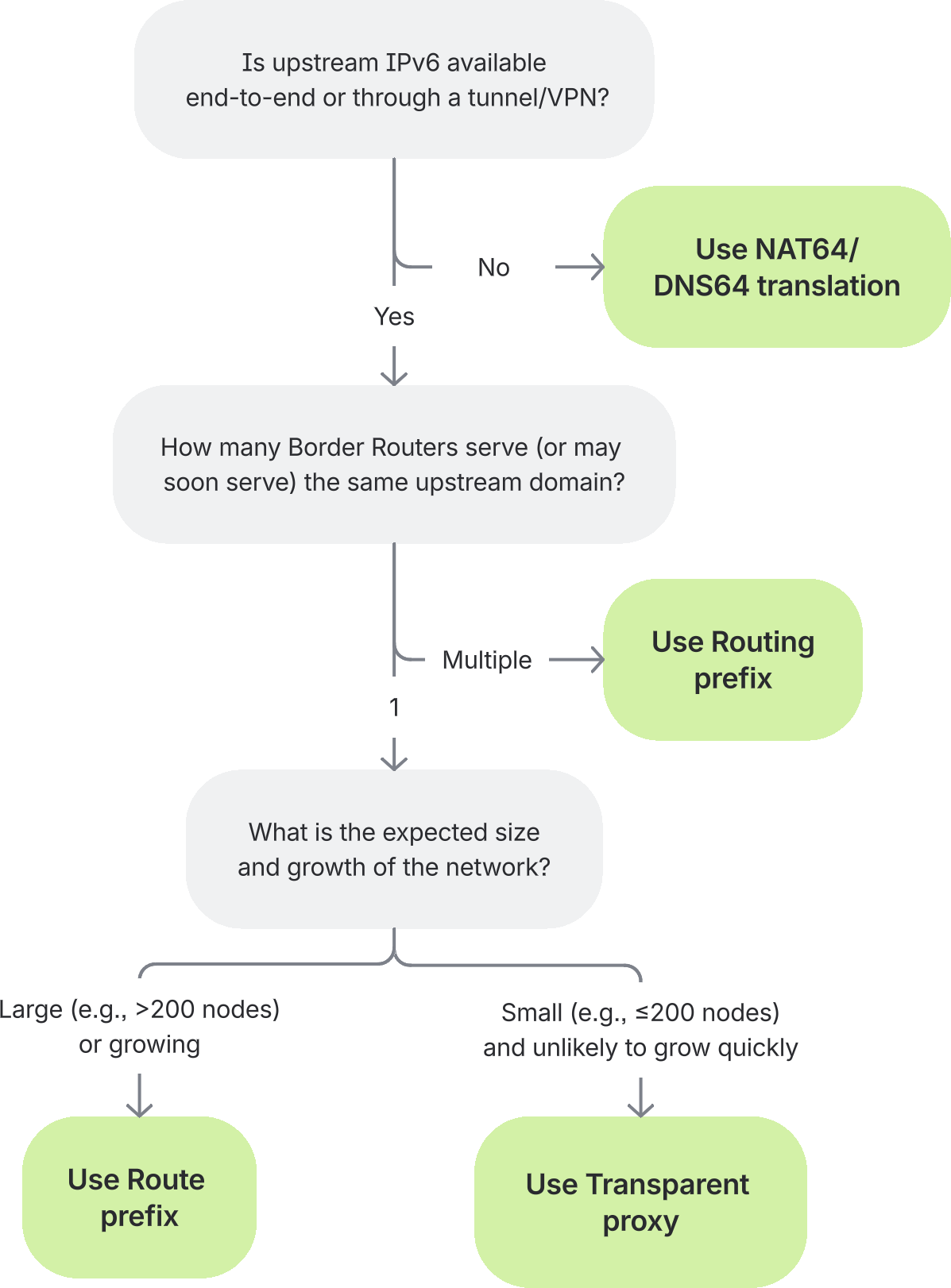
For more information on each model, feel free to read through the following pages. They explain each model in detail, including when to use it, its advantages, limitations, and key deployment considerations:
Advanced topologies
Some deployments use additional complexity to improve resilience or scalability, such as multiple Border Routers or hybrid backhauls. See Topology variations section for examples.
